Introduction
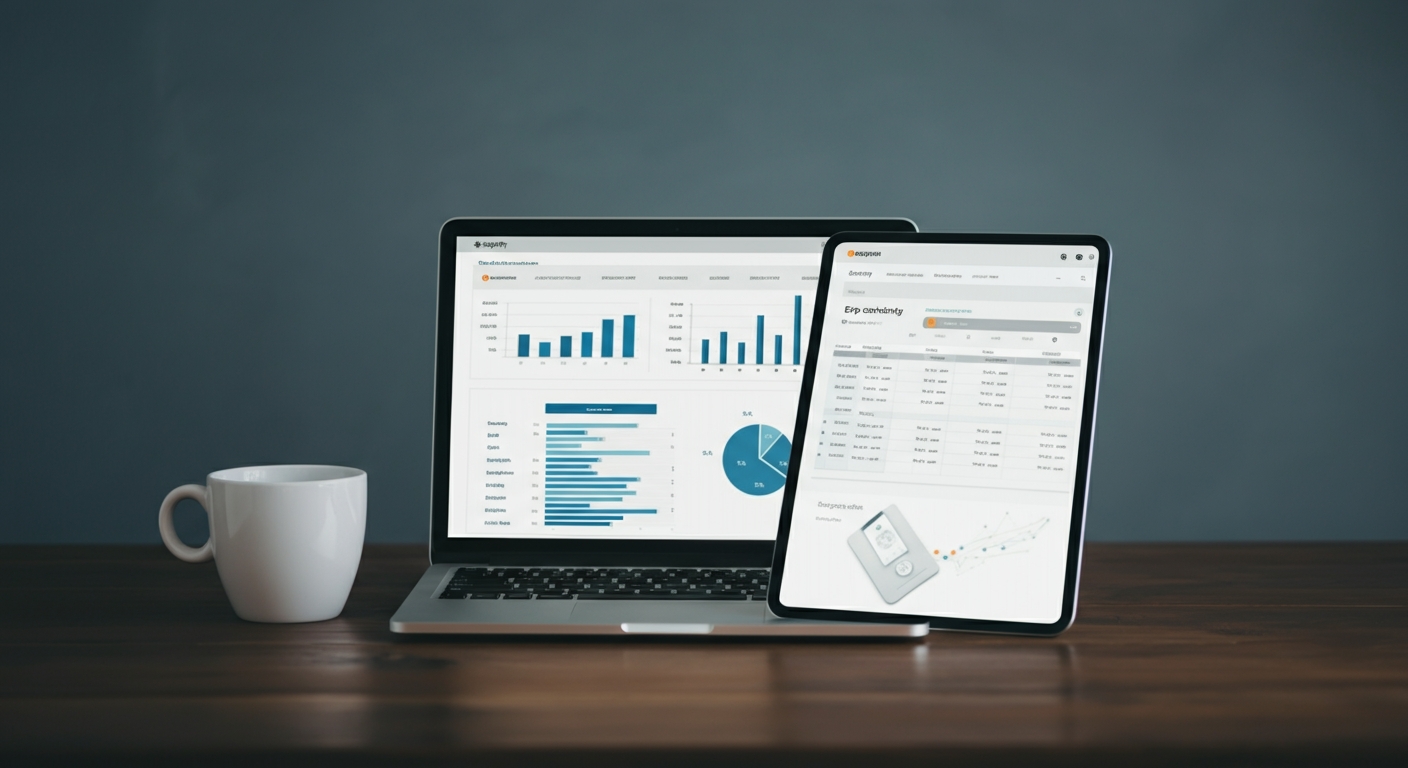
In today’s competitive market, Zimbabwean businesses—whether in retail, manufacturing, services, or distribution—must work smarter, not harder. You may already use an ERP (Enterprise Resource Planning) system to manage your inventory, finances, or operations. You might also use a CRM (Customer Relationship Management) system to track leads and sales.
But here’s the big question: Do your CRM and ERP systems talk to each other?
If they don’t, your business is losing time, money, and opportunities.
In this article, we explain why integrating your CRM with your ERP is no longer a luxury—it’s a necessity for growth, efficiency, and great customer experience.
What Is an ERP and What Is a CRM?
Before we get into integration, let’s clarify the difference.
ERP (Enterprise Resource Planning)
An ERP system manages your internal business functions, such as:
- Inventory and stock control
- Procurement and suppliers
- Accounting and payroll
- Manufacturing and operations
- Sales orders and invoicing
CRM (Customer Relationship Management)
A CRM system helps you manage:
- Leads and prospects
- Customer contact details
- Follow-ups and call logs
- Sales pipeline and forecasting
- Marketing campaigns
- Customer support or complaints
Both systems are powerful on their own—but when used separately, they create silos that slow your business down.
Why Integration Matters
Imagine this:
Your sales rep adds a new customer in your CRM, but the finance team can’t see them in the ERP to issue a pro forma invoice. Or, your warehouse dispatches stock based on a sales order, but your CRM still shows it as “pending.”
These gaps lead to:
- Delayed customer service
- Double data entry
- Lost sales opportunities
- Poor internal communication
- Confused reporting
An integrated system solves all of that.
Benefits of Integrating CRM With ERP
1. Single Source of Truth
Instead of customer information being stored in two different systems, integration ensures:
- Every department works with the same data
- No duplicated or outdated records
- Real-time updates across all teams
For example, once a customer is created in the CRM, they instantly appear in the ERP with billing details and transaction history.
2. Faster Sales Cycle
Your sales team doesn’t need to call the accounts department to check credit limits, stock availability, or outstanding invoices.
With integration:
- CRM shows real-time ERP data
- Quotations are more accurate
- Orders move faster from quote to invoice
- Customer onboarding is smoother
In fast-moving industries like retail, manufacturing, and logistics, this speed gives you a serious advantage.
3. Better Customer Experience
When a client calls, your team should know:
- What the client ordered
- When it was delivered
- What issues they’ve raised
- How much they still owe
With an integrated system, anyone in sales, accounts, or support can access this info immediately—no more back-and-forth or “let me check and call you back.”
4. Improved Cash Flow
Integration means:
- Faster invoicing
- Clearer tracking of payments and overdue accounts
- Real-time visibility into receivables
This allows you to follow up quicker, improve collections, and reduce bad debts—a big deal for Zimbabwean SMEs dealing with tight cash flows.
5. Data-Driven Decision Making
With both CRM and ERP working together, you get consolidated reports such as:
- Which sales reps bring the most value
- Which customers are most profitable
- Which products are moving the fastest
- How your sales funnel is performing compared to stock levels
This gives business owners clear insights to make smarter decisions.
6. Reduced Admin Costs
No more:
- Manually entering the same customer in both systems
- Importing and exporting data with CSV files
- Printing invoices and retyping them into your CRM
Integration saves time, reduces errors, and improves productivity across departments.
7. Stronger Internal Communication
When CRM and ERP are linked:
- Sales, marketing, finance, and operations are on the same page
- Updates flow automatically from one team to another
- Everyone focuses on the customer, not correcting data
In Zimbabwe, where many SMEs struggle with staff overlap and poor system use, integration simplifies how teams collaborate.
Local Example: A Real Scenario
Case Study: A Harare-based electrical supply company used QuickBooks for accounting (ERP) and a basic CRM to track clients. Sales reps would call clients and take orders, then email them to finance. Mistakes were common. Sometimes stock was out, or customers had unpaid invoices no one flagged.
After integrating their CRM with QuickBooks:
- Sales reps could instantly check client balances and available stock
- Orders flowed straight into QuickBooks
- Clients got faster service
- Internal fights over “who dropped the ball” disappeared
The result? Increased repeat business, fewer delays, and better cash flow.
When choosing systems (or upgrading), look for:
- Real-time two-way sync between CRM and ERP
- User access controls
- Mobile access (for reps in the field)
- Multi-currency support (for ZWL and USD)
- Local support and customisation (for Zimbabwean businesses)
- Easy reporting tools
Solutions like Odoo, Zoho One, and SAP Business One offer full integration. Even popular accounting tools like QuickBooks and Sage can connect with CRMs via third-party tools or plugins.
Conclusion
In 2025, running your CRM and ERP separately is like using two drivers to steer one kombi. It leads to confusion, delays, and wasted fuel.
Whether you’re a growing startup, a family-owned enterprise, or an established SME in Zimbabwe, integrating your CRM and ERP is one of the smartest moves you can make.
You’ll save time, serve customers better, and run your operations with clarity and confidence.